Monday, February 22, 2010

Sunday, February 21, 2010
Friday, February 19, 2010
Gendered Body
现代人对自己的身体很重视。
身体反映了健康
什么样的身体属于女性的身体,什么样的身体属于男性的身体?
现代人的对于人身体的理解:
与个人的agency联系起来,
有gendered的区别。女性的身体更feminine一点,男性的身体更masculine一点。
中国文字对身体的理解,可以究到汉代。
汉代对身体的理解很复杂。
1) Confucianism对身体的理解:孝道
故事:24孝
身体是来自父母的,
子女的身体来自父母,所以父母的意志可以加到子女的身上。
父母可以体罚学生
子女要通过身体向父母表达孝道
孝道胜于性别。
2)Daoism对身体的理解
故事:孙悟空故事,七十二变
身体是变化的
身体与自然之间的关系
3)Buddhism Body
Foreign Body
Gendered Body
Woman's body is inferior to men's
Six classes recast:
filial piety and body
身体反映了健康
什么样的身体属于女性的身体,什么样的身体属于男性的身体?
现代人的对于人身体的理解:
与个人的agency联系起来,
有gendered的区别。女性的身体更feminine一点,男性的身体更masculine一点。
中国文字对身体的理解,可以究到汉代。
汉代对身体的理解很复杂。
1) Confucianism对身体的理解:孝道
故事:24孝
身体是来自父母的,
子女的身体来自父母,所以父母的意志可以加到子女的身上。
父母可以体罚学生
子女要通过身体向父母表达孝道
孝道胜于性别。
2)Daoism对身体的理解
故事:孙悟空故事,七十二变
M0nk3y K1ng
身体是变化的
身体与自然之间的关系
3)Buddhism Body
Foreign Body
Gendered Body
Woman's body is inferior to men's
Six classes recast:
filial piety and body
Thursday, February 18, 2010
Worship the God of Wealth during the Spring Festival

I ran into these pictures online:
500,000 citizens went to Guiyuan Temple, burning incenses and requesting blessings to worship the god of wealth.
The pictures remind me of what Qian Yong wrote on Popular Religion in 1838:
Every year in the spring when there is no farm work to tend to , people feel superstitious doubts about ghosts and spirits. What happened then is called "going out for a gathering," Everyone says that this [religious processions and gatherings] can "exorcise evil and bring good fortune" or "get rid of hardship and eliminate locusts." There is a great commotion when these gatherings occur and the whole area goes wild. Tens of thousdnads of men and women appear to watch these parades and although lcoal magistrates occasionally ban such actitives, they grow and prosper from year to year.
Qian Yong was frowning eyebrow on this. He recorded "Ten Evils of Relgious Gatherings" ( a scholar of Jiangyin, LiJiantian) to show his consent with the author. Li listed ten evils of such gatherings:
1. Blaspheming the ghosts and spirits
2. Confusing the ritual code
3. Squaderign money
4. Disrupting normal occuptions
5. Mixing of men and women
6. Causing fires
7. Promoting gambling
8. Causing fighting
9. Attracting robbbers and thieves
10. Damaginign social customs
If Li and Qian had lived today, they could have criticized the worship of the god of wealth with the same excurses. If it were twenty years ago, I would imagine that Xinhua New agency would have had a commentary criticizing such gathering as squanderign money, causing fires, and damaging social new customs.
Now people would hesitate to criticize such gatherings. At least in the above pictures, such gatherings is considered to embody the prosperity of China. We are living in the era of consumption.
Tuesday, February 16, 2010
Shen Xue and Zhao Hongbo
They have been skating for eighteen years. I've been watching them twelve years. Congrats, Shen Xue and Zhao Hongbo.
Pair short program on Winter Olympic Games 2010
Even though Shen Xue slipped down from the top of Zhao's hand, they still got a gold medal.

Pair short program on Winter Olympic Games 2010
Even though Shen Xue slipped down from the top of Zhao's hand, they still got a gold medal.

Saturday, February 13, 2010
Chinese New Year Eve
It is Chinese New Year Eve today. My husband and I called the families back in China. At 12pm last night, I was sending our daughter's videos to her grandparents. This morning at six my sister used QQ to wake up the whole family. She wanted us to watch the New Year Gala on TV with them together. It is an re-invented tradition starting from 1983 when TV became a necessary facility in Chinese households.
We had never thought it was so difficult to open up web page for the New Year Gala. We could have used pplive to see the gala broadcast. Unfortunately my mac does not support PP and my husband's PC cannot download the PPlive.
We try to use CCTV international channel to watch the live broadcasting. Unfortunately, the speed is so slow that we either cannot see the image or hear the sound. So we decided to watch live broadcast on the campus. Again, the campus internet does not improve the download speed. We cannot do anything but giving up. So we will see videos tomorrow.
My favorite song for this year's gala is
Wang Fei, Legend
 Only one night, the video got 100,000 hits.
LL is with us today. She does not seem to watch the Gala. Once she has time, LL always browses videos on the youtube by herself.
Last time we had spring festival in China is 2006.
When will we have time to go back for the Chinese New Year?
We had never thought it was so difficult to open up web page for the New Year Gala. We could have used pplive to see the gala broadcast. Unfortunately my mac does not support PP and my husband's PC cannot download the PPlive.
We try to use CCTV international channel to watch the live broadcasting. Unfortunately, the speed is so slow that we either cannot see the image or hear the sound. So we decided to watch live broadcast on the campus. Again, the campus internet does not improve the download speed. We cannot do anything but giving up. So we will see videos tomorrow.
My favorite song for this year's gala is
Wang Fei, Legend
 Only one night, the video got 100,000 hits.
LL is with us today. She does not seem to watch the Gala. Once she has time, LL always browses videos on the youtube by herself.
Last time we had spring festival in China is 2006.
When will we have time to go back for the Chinese New Year?
Tuesday, February 9, 2010
New Folk Song for The Year of Tiger
Each year, people would come up with new lyrics for the New Year Celebration. Most new lyrics concerns good fortune, promising future, and a happy life. Here is a new folk song I got for this year (2010)
一二三四五,(yi, er, san, si, wu)
上山逗老虎。(Shang shan dou lao hu)
摇摇老虎头,(yao yao lao hu tou)
吃穿不用愁;(chi chuan bu yong chou)
摸摸老虎腿,(mo mo lao hu tui)
月月加薪水;(yue yue jia xin shui)
拍拍老虎背,(pai pai lao hui bei)
存款翻十倍;(chun ban fan shi bei)
亲亲老虎嘴,(qing qng lao hu zui)
生活好滋味; (sheng huo hao zi wei)
祝大家虎年快乐 (zhu da jia hu nian kuai le)
One, two, three, four, five
We tickle tigers we got on mount
一二三四五,(yi, er, san, si, wu)
上山逗老虎。(Shang shan dou lao hu)
摇摇老虎头,(yao yao lao hu tou)
吃穿不用愁;(chi chuan bu yong chou)
摸摸老虎腿,(mo mo lao hu tui)
月月加薪水;(yue yue jia xin shui)
拍拍老虎背,(pai pai lao hui bei)
存款翻十倍;(chun ban fan shi bei)
亲亲老虎嘴,(qing qng lao hu zui)
生活好滋味; (sheng huo hao zi wei)
祝大家虎年快乐 (zhu da jia hu nian kuai le)
One, two, three, four, five
We tickle tigers we got on mount
Saturday, February 6, 2010
Avartar in China
Before it came out, I took it for granted and thought the moive Avatar tells a story about Hinduism and Zen Buddhism, pretty much like that of the TV show on the Disney channel.
Then I got a message from a friend in China. She told me Avatar sucked 5000 million RMB in China. People lined up to watch the movie. They wrote about comments on the movie. The boss of neteast, a third largest porter in China, asked his employees to write one-sentence comment on Avatar.

http://img1.gtimg.com/news/pics/26990/26990012.jpg
Many Hollywood movies attract a large number of Chinese audience. It is common to see so many people lining up for Avatar. However, it is surprising to see some many reviews on Avatar online. And 99% reviews has positive feedbacks to the movie. This contrasts with reviews on The Story of Noodle (san qiang) by Zhang Yimou, a director of To Live and the Story of Qiuque. 99% reviews give negative feedbacks to the movie and marks it as a failure to cater to the market.
It is quite funny.
Then I got a message from a friend in China. She told me Avatar sucked 5000 million RMB in China. People lined up to watch the movie. They wrote about comments on the movie. The boss of neteast, a third largest porter in China, asked his employees to write one-sentence comment on Avatar.
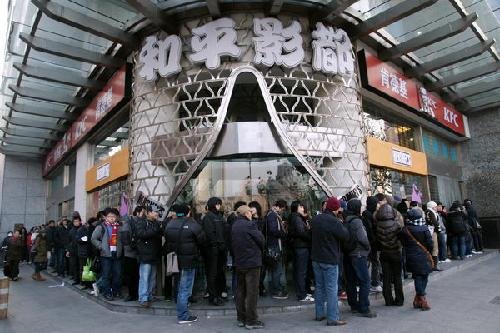
http://img1.gtimg.com/news/pics/26990/26990012.jpg
Many Hollywood movies attract a large number of Chinese audience. It is common to see so many people lining up for Avatar. However, it is surprising to see some many reviews on Avatar online. And 99% reviews has positive feedbacks to the movie. This contrasts with reviews on The Story of Noodle (san qiang) by Zhang Yimou, a director of To Live and the Story of Qiuque. 99% reviews give negative feedbacks to the movie and marks it as a failure to cater to the market.
It is quite funny.
Snow
We got 26 inches snow this weekend, the heaviest since 1996. Last Friday, 70% students showed up in both classes.Gym was closed. So is the library. It is fun to see some students made tunnels out of piled snow on the campus.
I am from southeast China and had never saw such big snow in my life until I set my foot in M ten years ago. I was so amazed by the buildings connected by tunnels and skyways on the campus. In the winter, people walks through tunnels and skyways. Boom, they are gophers for sure.
Snow always carries symbolic meanings for many Chinese. Auspicious snow predicts a properous year (rui xue zhao feng nian 瑞雪兆丰年). This is an old saying that I learned from the textbook of common knowledge of the nature (zi ran chang shi 自然常识) in elementary school.
Born and raised in the south, I have never see dangers and risks behind the snow. I anticipated the snow every year. I liked the beautiful scene when they covered the dirt, leaves, and rocks, only leaving a vast white world without a speck. It is a pity that snow in the southeast China always melts down once it falls on the ground. It is rare to see a world covered with white snow in my hometown, let alone to have a snow fight. I only saw snowman and snow fight on pictorial books, movies, and later on TV.
Ten years ago I, for the first time, saw the snow fell down and covered everything with white in one night. Inch by inch, the whole landscape is completely changed. I saw kids made figure print on the snow, footprint of squirrels scattered around, and a big scared turkey trying t find the way back. The thick snow on the roof of the house made a kingdom of a fairy tale.
Snow really changes the landscape with its magic "revolutionary power."
This is an poem in a textbook of the middle school, which highlight the revolutionary magic of snow
Snow--- to the melody of Qian Yuan Chun
The Scene is northern land
Thousand li is sealed in ice
Ten thousand li in blowing snow
From the Great Wall, I gaze inside and beyond,
and see only vast tundra
Up and down the yellow river
the gurgling water is frozen
Mountains dance like silver snake
hills gallop like wax bright elephant
trying to climb over the sky
on days of sunlight
the planet teases us in her white dress and rouge
How splendid the rivers and mountains
which makes countless heres bow homage
Alas! The First Emperor of the Qin and the Emperor of Military of the Han
were lackin gin literary grace
And Taizong of the Tang and the Taizu of the Song
had litter poetry in their souls
And Genghis Khan,
Proud Son of Heaven for a day
Knew only shooting eagles, bow outstretched
All are gone!
For truly a great men
Look to this age alone.
沁园春·雪
北国风光 千里冰封 万里雪飘
望长城内外,惟余莽莽;
大河上下,顿失滔滔。
山舞银蛇,原驰蜡象,欲与天公试比高。
须晴日,看红装素裹,分外妖娆。
江山如此多娇
引无数英雄竞折腰。
惜秦皇汉武 略输文采;
唐宗宋祖,稍逊风骚。
一代天骄 成吉思汗 只识弯弓射大雕。
俱往矣,数风流人物,还看今朝。
I am from southeast China and had never saw such big snow in my life until I set my foot in M ten years ago. I was so amazed by the buildings connected by tunnels and skyways on the campus. In the winter, people walks through tunnels and skyways. Boom, they are gophers for sure.
Snow always carries symbolic meanings for many Chinese. Auspicious snow predicts a properous year (rui xue zhao feng nian 瑞雪兆丰年). This is an old saying that I learned from the textbook of common knowledge of the nature (zi ran chang shi 自然常识) in elementary school.
Born and raised in the south, I have never see dangers and risks behind the snow. I anticipated the snow every year. I liked the beautiful scene when they covered the dirt, leaves, and rocks, only leaving a vast white world without a speck. It is a pity that snow in the southeast China always melts down once it falls on the ground. It is rare to see a world covered with white snow in my hometown, let alone to have a snow fight. I only saw snowman and snow fight on pictorial books, movies, and later on TV.
Ten years ago I, for the first time, saw the snow fell down and covered everything with white in one night. Inch by inch, the whole landscape is completely changed. I saw kids made figure print on the snow, footprint of squirrels scattered around, and a big scared turkey trying t find the way back. The thick snow on the roof of the house made a kingdom of a fairy tale.
Snow really changes the landscape with its magic "revolutionary power."
This is an poem in a textbook of the middle school, which highlight the revolutionary magic of snow
Snow--- to the melody of Qian Yuan Chun
The Scene is northern land
Thousand li is sealed in ice
Ten thousand li in blowing snow
From the Great Wall, I gaze inside and beyond,
and see only vast tundra
Up and down the yellow river
the gurgling water is frozen
Mountains dance like silver snake
hills gallop like wax bright elephant
trying to climb over the sky
on days of sunlight
the planet teases us in her white dress and rouge
How splendid the rivers and mountains
which makes countless heres bow homage
Alas! The First Emperor of the Qin and the Emperor of Military of the Han
were lackin gin literary grace
And Taizong of the Tang and the Taizu of the Song
had litter poetry in their souls
And Genghis Khan,
Proud Son of Heaven for a day
Knew only shooting eagles, bow outstretched
All are gone!
For truly a great men
Look to this age alone.
沁园春·雪
北国风光 千里冰封 万里雪飘
望长城内外,惟余莽莽;
大河上下,顿失滔滔。
山舞银蛇,原驰蜡象,欲与天公试比高。
须晴日,看红装素裹,分外妖娆。
江山如此多娇
引无数英雄竞折腰。
惜秦皇汉武 略输文采;
唐宗宋祖,稍逊风骚。
一代天骄 成吉思汗 只识弯弓射大雕。
俱往矣,数风流人物,还看今朝。
Joy Luck Club
This is the second time we watched the movie in the class. Again we did not finish it. The director Wayne Wang also directs a new film, A Thousand Year of Good Prayers, (trailer) adapted from a novel by Li Yiyun. Two films are very similar since both concern the relation between mother (father)/daughter in Chinese immigrant families
Parenting becomes a hard job in many immigrant families in the US. LL searched many videos on stereotyped Chinese parents on youtube. We can make a list of stereotype of these parents:
1. care too much about grades
2. harsh and pushy on kids
3. frugal
4. nagging
5. high expectations
6. show off the achievement of their daughters and sons
7. never say "I love you" to kids
8. caring too much and kids do not have their own private space
9. they do not understand their kids, annoying (LL suggests this)
............
The Joy Luck Club resonates these stereotypes, but echoes them in a sutble way. The mother in the first story was rebellious (to her mother-in-law) , independent, and strong when she was a daughter. However, she was dominant, pushy, and picky when she becomes a mother. She set up a high expectation for her daughter and wanted her to be a prodigious pianist. She was also picky about who would be her daughter's husband. It is interesting to see how a rebellion turned into a dominant mother. She finally becomes a mother-in-law after many years a new bride (duo nian de xifu ao cheng po 多年的婿妇熬成婆). Instead of emphasizing on the endless conflict, Wang chose to show comprise between a mother and a daughter. The mother escaped a dominant mother-in-law in old China by coming to the US while her daughter compromised a dominant mother in the US. This is where, I think, the subtlest part of the story. When the mother and the daughter embraced each other and see themselves in each other, I cannot help thinking:
Is this the mother/daughter relationship supposed to be everywhere? conflict, negotiation, and comprise. Is Wang tell a universal story or a story of a story of an immigrant family?
The second story is very funny. The mother suffered a villian husband in old China. Out of hatred, she killed her own son. She betrayed that family by coming to the US. She was both a victim and a killer. She had a new marriage and a new life in the US. However, she could not stop worring about her daughter's marriage. If she herself was a victim of a wicked husband, the mother did not want this nightmare repeated on her own daughter.It seems this would not happen since she has an independent daughter who would like to share every penny with her husband.
Does this work? The life is full of black humor when a husband sent a pet cat as a gift for a wife and then after his wife to pay every expenses for that. It is more than a black humor when that husband has a salary eight times more than his wife.
The mother could not figure out what was wrong. The daughter also did not know what should be done. Both were puzzled by their past and their present. To be dependent or not to be dependent, it is a question.
Go back to the question of stereotyped Asian parenting. I cannot help asking: would these be only about Asian parents or parents in all. We have Asian parents who cared much about kids' grades. But we also American parents sent kids to various summer camps. We have Asian parents who might never say "I love you" to their kids but prepared for lunch and dinner every day for kids. We have Asian parents who are picky, pushy, and dominant, which we might also see in many other families. I can see nagging parents everywhere, not just limited to Asian parents. As for misunderstanding, it happens everywhere, not a privilege of Asian parents.
My point is: we cannot really figure out who are Asian parents just as we cannot figure out who are a traditional Chinese mother and who are westernized mother in Joy Luck Club.
Parenting becomes a hard job in many immigrant families in the US. LL searched many videos on stereotyped Chinese parents on youtube. We can make a list of stereotype of these parents:
1. care too much about grades
2. harsh and pushy on kids
3. frugal
4. nagging
5. high expectations
6. show off the achievement of their daughters and sons
7. never say "I love you" to kids
8. caring too much and kids do not have their own private space
9. they do not understand their kids, annoying (LL suggests this)
............
The Joy Luck Club resonates these stereotypes, but echoes them in a sutble way. The mother in the first story was rebellious (to her mother-in-law) , independent, and strong when she was a daughter. However, she was dominant, pushy, and picky when she becomes a mother. She set up a high expectation for her daughter and wanted her to be a prodigious pianist. She was also picky about who would be her daughter's husband. It is interesting to see how a rebellion turned into a dominant mother. She finally becomes a mother-in-law after many years a new bride (duo nian de xifu ao cheng po 多年的婿妇熬成婆). Instead of emphasizing on the endless conflict, Wang chose to show comprise between a mother and a daughter. The mother escaped a dominant mother-in-law in old China by coming to the US while her daughter compromised a dominant mother in the US. This is where, I think, the subtlest part of the story. When the mother and the daughter embraced each other and see themselves in each other, I cannot help thinking:
Is this the mother/daughter relationship supposed to be everywhere? conflict, negotiation, and comprise. Is Wang tell a universal story or a story of a story of an immigrant family?
The second story is very funny. The mother suffered a villian husband in old China. Out of hatred, she killed her own son. She betrayed that family by coming to the US. She was both a victim and a killer. She had a new marriage and a new life in the US. However, she could not stop worring about her daughter's marriage. If she herself was a victim of a wicked husband, the mother did not want this nightmare repeated on her own daughter.It seems this would not happen since she has an independent daughter who would like to share every penny with her husband.
Does this work? The life is full of black humor when a husband sent a pet cat as a gift for a wife and then after his wife to pay every expenses for that. It is more than a black humor when that husband has a salary eight times more than his wife.
The mother could not figure out what was wrong. The daughter also did not know what should be done. Both were puzzled by their past and their present. To be dependent or not to be dependent, it is a question.
Go back to the question of stereotyped Asian parenting. I cannot help asking: would these be only about Asian parents or parents in all. We have Asian parents who cared much about kids' grades. But we also American parents sent kids to various summer camps. We have Asian parents who might never say "I love you" to their kids but prepared for lunch and dinner every day for kids. We have Asian parents who are picky, pushy, and dominant, which we might also see in many other families. I can see nagging parents everywhere, not just limited to Asian parents. As for misunderstanding, it happens everywhere, not a privilege of Asian parents.
My point is: we cannot really figure out who are Asian parents just as we cannot figure out who are a traditional Chinese mother and who are westernized mother in Joy Luck Club.
Chinese collectionsc at DC
I lived one hour away from DC (not on a traffic day). Last semester I visited both places and ordered my cards there.
What can a Chinese historian get from the museums and libraries there? Here is the list.
Painting: The Freer Museum is the home to 1200 Chinese paintings (compared with 500 owned by the Metropolitan Museum at New York)
Local Histories and Gazetteers: The Library of Congress is the home of 4000 titles, the largest collection in the US. It is also the home to many Chinese rare books in the US. Unfortunately the catelogue is not available online. One has to flip through the card catelogue to know about collections.
Last semester I spent several days in the Library of Congress, browsing the card catalogues in the back of the reading room of oriental collections. I ordered Zixia wenxian lu, a manuscript has mentioned many times in Xiachuan xu zhi. Fortunately it is already digitalized and can be browsed on the computer. But download is not allowed. One has to be in the reading room to browse the digital version. This reminds me of the Shanghai Library.
What can a Chinese historian get from the museums and libraries there? Here is the list.
Painting: The Freer Museum is the home to 1200 Chinese paintings (compared with 500 owned by the Metropolitan Museum at New York)
Local Histories and Gazetteers: The Library of Congress is the home of 4000 titles, the largest collection in the US. It is also the home to many Chinese rare books in the US. Unfortunately the catelogue is not available online. One has to flip through the card catelogue to know about collections.
Last semester I spent several days in the Library of Congress, browsing the card catalogues in the back of the reading room of oriental collections. I ordered Zixia wenxian lu, a manuscript has mentioned many times in Xiachuan xu zhi. Fortunately it is already digitalized and can be browsed on the computer. But download is not allowed. One has to be in the reading room to browse the digital version. This reminds me of the Shanghai Library.
Subscribe to:
Posts (Atom)